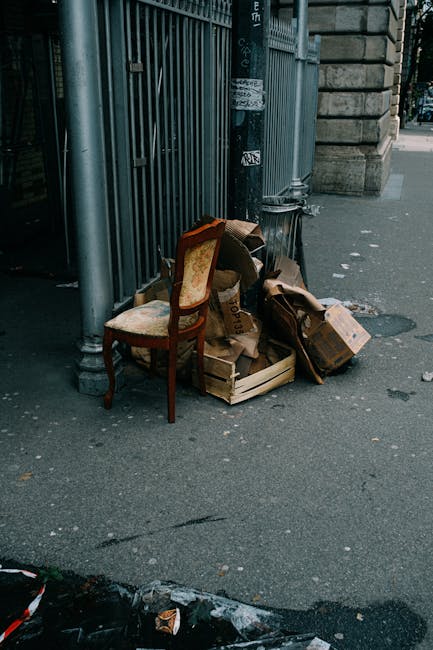
Bulky Waste Pickup in Dulwich: Who Removes Old Furniture?
If you've got an old sofa blocking the hallway, a mattress that won't fit in the lift, or a dining set that has reached the end of the road, you are not alone. Bulky Waste Pickup in Dulwich: Who Removes Old Furniture? is one of those questions people usually ask once the item is already taking up space, gathering dust, and becoming a bit of a headache. Truth be told, furniture removal sounds simple until you try to move a wardrobe down a narrow staircase in a South London terrace.
This guide explains who actually removes old furniture in Dulwich, how bulky waste pickup works, which options make sense for different situations, and what to check before you book anyone. You'll also find practical steps, common mistakes, compliance notes, and a few local-minded tips so you can make a clean decision without the usual faff.
Table of Contents
- Why Bulky Waste Pickup in Dulwich: Who Removes Old Furniture? Matters
- How Bulky Waste Pickup in Dulwich: Who Removes Old Furniture? Works
- Key Benefits and Practical Advantages
- Who This Is For and When It Makes Sense
- Step-by-Step Guidance
- Expert Tips for Better Results
- Common Mistakes to Avoid
- Tools, Resources and Recommendations
- Law, Compliance, Standards, or Best Practice
- Options, Methods, or Comparison Table
- Case Study or Real-World Example
- Practical Checklist
- Conclusion
- Frequently Asked Questions
Why Bulky Waste Pickup in Dulwich: Who Removes Old Furniture? Matters
Old furniture is not just "stuff in the way". It affects how a home feels, how safely people can move around, and how quickly a property can be cleared for cleaning, decorating, moving, or letting. In Dulwich, where many homes have tight access, shared entrances, basement rooms, or narrow roads, bulky items can be awkward fast.
That is why the question is bigger than disposal. You are really deciding who should lift, load, transport, and remove the item responsibly. The answer might be a council bulky waste service, a private furniture pickup, a man and van team, or a removals crew if the furniture is part of a bigger move. Each has its own strengths.
A quick example: if you have one broken armchair and a small table, a dedicated furniture pick up service may be the easiest route. If you are clearing a whole living room after a move, a broader service like home moves or man and van support may be better value. The trick is matching the job to the right type of removal.
And yes, that match matters. Wrong-sized vehicle, wrong crew, wrong timing - suddenly the "simple collection" turns into a second plan, a call-back, and a lot of standing around with your arms folded. Nobody wants that.
How Bulky Waste Pickup in Dulwich: Who Removes Old Furniture? Works
Most furniture pickup jobs follow a similar pattern: you describe the items, share access details, get a quote or booking option, then the collection team arrives, removes the furniture, and transports it away. The details differ depending on whether you use a council route or a private provider.
Common ways old furniture gets removed
- Council bulky waste collection: suitable for certain household items, usually booked in advance and often limited by item type, timing, and collection terms.
- Private furniture pickup: useful when you want more flexibility, faster turnaround, or help with heavier, awkward, or mixed loads.
- Man and van service: practical for single items, small clearances, and jobs where access is a bit tricky but the load is not huge.
- Removal team or truck hire: better for larger home clearances, renovation waste, move-day furniture, or multiple bulky pieces.
Private removals tend to be more flexible about timing and loading help. Council services can be suitable, but they are often less tailored to awkward access, urgent timelines, or mixed furniture-and-boxes situations. If you are sorting a bigger household clear-out, a house removalists service may handle the whole job more smoothly than piecing together separate collections.
To be fair, not every item is treated the same. A solid wood wardrobe, a dismantled bed frame, and a fabric sofa all need different handling. Some pieces can be reused or donated if they are in reasonable condition, while others need disposal or recycling. Responsible providers should explain what they can take and what happens next.
If the furniture removal is tied to moving day, you might also look at moving truck options or removal truck hire so the disposal and transport parts line up instead of competing with one another. That coordination saves time. Quite a lot of it, sometimes.
Key Benefits and Practical Advantages
The main benefit of using a proper bulky waste pickup service is simple: you avoid doing heavy, risky lifting yourself. But the real advantages go deeper than that.
- Less physical strain: old furniture is often heavier than it looks, especially when it has water damage, broken frames, or no easy grip points.
- Cleaner access routes: items are removed without scratches, bent bannisters, or that awkward moment when the sofa stops halfway down the stairs.
- Faster turnaround: useful if you are staging a room, ending a tenancy, or making space for new furniture delivery.
- Better planning: a scheduled pickup is easier to manage than leaving items outside and hoping they disappear, which they usually do not.
- More responsible disposal: decent providers sort items for reuse, recycling, or proper disposal where possible.
There is also the peace-of-mind factor. If you have ever stared at a cracked wardrobe leaning at an odd angle and thought, "Right, and now what?", you already know this matters. The right service removes not only the furniture, but the mental clutter too.
For business premises, the benefit is even clearer. An office or shop with old desks, filing cabinets, or reception furniture needs a reliable clear-out plan. In those cases, services such as commercial moves or office relocation services can be more efficient than trying to handle bulky items in-house.
Who This Is For and When It Makes Sense
Bulky furniture removal is not just for people who are moving house. In practice, it is useful for a surprisingly broad range of situations.
It makes sense if you are:
- clearing out a single large item like a sofa, bed, wardrobe, or cupboard
- preparing for a house move and need to reduce what you are taking with you
- updating a room and replacing old furniture with new
- managing probate, tenancy changes, or a household downsizing
- sorting a garage, loft, or spare room that has slowly become storage by accident
- handling office furniture that is no longer needed
In Dulwich, many people also use furniture pickup when access is the main issue. Maybe the item fits through the front door but not the hallway turn. Maybe the lift is too small. Maybe the road is busy and you can only realistically load at a quiet time. Local removal teams deal with this kind of thing every day, so they are used to making a plan that actually works on the ground.
And if your furniture removal is part of a bigger home transition, it can be smart to combine it with packing and unpacking services. That way, the old items leave and the new setup starts with a bit more order, which is rare and lovely when it happens.
Step-by-Step Guidance
If you want to remove old furniture without stress, follow a clear process. It is not glamorous, but it works.
- List the items. Write down exactly what needs removing: type, size, number of pieces, and condition.
- Check access. Note stairs, narrow hallways, parking limits, shared entrances, and any building restrictions.
- Decide whether the furniture can be reused. Some items may be suitable for resale, donation, or reuse; others are not worth the effort.
- Choose the right service. One item may suit a furniture pickup, while a full-clearance job may need a van and crew.
- Ask what is included. Loading, dismantling, lifting from upstairs, and disposal fees are not always bundled the same way.
- Book a realistic slot. Give yourself buffer time, especially if parking is tight or the item is heavy.
- Prepare the area. Move small objects out of the way, clear a path, and unplug anything connected to the furniture.
A useful rule of thumb: if you think the item might be awkward, assume it is awkward. That little bit of realism saves a lot of drama on collection day.
If you are unsure which service to choose, start with a provider that offers flexible local transport such as man with van support. It is often a sensible middle ground for homeowners who do not need a full removals crew but do need proper lifting and transport.
Expert Tips for Better Results
Over time, the difference between a smooth furniture pickup and a frustrating one usually comes down to small decisions made before the van arrives.
- Measure first, guess never. Take width, height, and depth measurements, especially for wardrobes, corner sofas, and double beds.
- Take photos before booking. A photo helps the provider judge labour, vehicle size, and whether dismantling is needed.
- Ask about dismantling. Some furniture is much easier to move in sections. A good team can advise whether that is worth doing.
- Keep pathways clear. Even one shoe rack or plant pot in the wrong place can slow the whole job down.
- Check parking early. Dulwich streets can be busy, and parking restrictions are not something you want to discover mid-collection.
A small but useful habit: place all items to be removed in one area the day before, if you can do that safely. It gives the crew a clean start and helps you catch mistakes. People often realise, at the last minute, that one chair was meant to stay. Happens more than you'd think.
For some households, the best move is to combine furniture pickup with a general removals plan using home moves. That makes the process less piecemeal, especially if you are handling both unwanted furniture and items going to a new property.
Common Mistakes to Avoid
Most problems with bulky waste pickup are avoidable. The issue is usually not the furniture itself; it is the assumptions made around it.
- Leaving booking too late: especially if you need a specific day or have a move deadline.
- Underestimating weight: old furniture can be deceptively heavy, particularly if it contains metal frames or moisture damage.
- Not checking what the provider will take: some services exclude certain materials or mixed loads.
- Forgetting access details: a provider can only plan properly if they know about stairs, parking, and entry codes.
- Assuming all old furniture can be left on the pavement: that is not a safe or tidy default, and local rules may apply.
- Choosing purely on price: the cheapest option is not always the easiest or most reliable one.
One common mistake is booking a collection for "the sofa" and then adding two armchairs, a footstool, and a broken coffee table on the day. A fair provider may be able to adjust, but it is better to be upfront from the start. Saves the awkward conversation, honestly.
Tools, Resources and Recommendations
You do not need a van full of specialist kit to prepare for a furniture pickup, but a few basic tools make life easier. If you are dismantling items or tidying up before collection, the following help a lot:
- tape measure
- Phillips and flathead screwdriver
- Allen keys for flat-pack furniture
- gloves with a decent grip
- strong bags or boxes for small loose parts
- blankets or floor protection if items need shifting through living space
For mixed household jobs, a provider offering a broader vehicle and loading option can be useful. You may want to look at moving truck support if the load is large or if furniture removal is happening alongside a relocation. If you are curious about the business background and service style, the about us page is also worth a look for a better sense of the company behind the service.
And if you prefer to ask a few questions before booking, use the contact page. A quick conversation can clarify access, pricing structure, and whether your furniture can be handled in one visit. That five-minute call can save a lot of guesswork.
Law, Compliance, Standards, or Best Practice
Furniture removal sits in a practical space where common sense and responsible handling matter. In the UK, you generally want any waste or disposal activity to be managed by a legitimate carrier or service that can explain how items are handled. If a provider seems vague about where things go, that is a small red flag.
Best practice usually includes:
- clear description of items before collection
- safe lifting and transport procedures
- appropriate sorting for reuse, recycling, or disposal where possible
- respect for access routes, neighbours, and parking constraints
- transparent terms about what is and is not included
It is also sensible to keep an eye on your own responsibilities. If you place items outside a property, they can become a nuisance or an obstruction. If you are in a managed building, your lease or building rules may also affect where and when items can be left for collection. That part can be boring, yes, but it matters.
Before booking, it can help to review service details such as the terms and conditions and privacy policy. Not because you expect problems, but because good service usually looks clear on paper as well as in person.
Options, Methods, or Comparison Table
Different removal options work better for different needs. Here is a simple comparison to help you narrow it down.
| Option | Best for | Advantages | Watch-outs |
|---|---|---|---|
| Council bulky waste collection | Basic household items, non-urgent removals | Often straightforward for standard items | Less flexible on timing, access, and item variety |
| Furniture pick up service | Single items or small groups of furniture | Convenient, tailored, often quicker | May depend on item size, labour, and access |
| Man and van | Small clearances, awkward lifts, local transport | Flexible and practical | May not suit very large loads without prior planning |
| Full removals or truck hire | House moves, large clear-outs, multi-room jobs | Best for bigger, coordinated projects | Usually more than you need for one or two items |
The right answer depends on the size of the job, your timing, and how much lifting is involved. For a small job, a light-touch service is ideal. For a bigger move, pairing furniture removal with house removalists or removal truck hire can simplify everything.
Case Study or Real-World Example
Here is a realistic example from the kind of job people in Dulwich often face. A couple in a Victorian terrace wanted to clear an old three-seater sofa, a bed base, and a chest of drawers before redecorating the front room. The furniture was still inside the property, and the stairs had a tight turn halfway down. Nothing dramatic, just one of those homes where every corner seems to make a judgement call.
At first, they thought about waiting for council collection. Then they realised they also needed help moving a few items to storage and wanted the room cleared in one afternoon. A local man and van style service made more sense. The provider confirmed access details in advance, checked whether the bed base needed dismantling, and arrived with the right vehicle size. The job was done without damaging the walls or blocking the pavement for long.
The interesting part was not the furniture itself. It was the planning. Once they had the right service type, the whole thing became calm and manageable. The room was cleared, the decorators could start the next morning, and no one had to wrestle a mattress around a bannister at 7 a.m. on a weekday. Which, let's be honest, is a small victory.
Practical Checklist
Use this checklist before booking any bulky waste or old furniture pickup in Dulwich.
- Identify every item you want removed
- Measure large pieces and note awkward shapes
- Check stairs, doors, lifts, and parking access
- Take photos of the items if possible
- Decide whether anything can be reused or donated
- Confirm whether dismantling is required
- Ask what the service includes and excludes
- Choose a date that gives you buffer time
- Clear walkways and protect delicate floors if needed
- Keep keys, entry codes, and contact details ready
Expert summary: the best bulky waste pickup is the one that matches the item, the access, and your timeline. If any of those three are off, the job becomes harder than it needs to be. Match the service to the reality of the property, not the wishful version. That is usually the winning move.
Conclusion
So, who removes old furniture in Dulwich? In practice, it could be a council collection, a dedicated furniture pickup service, a man and van team, or a full removals provider depending on what you have, where it is, and how quickly you need it gone. The smartest choice is rarely the biggest one - it is the most appropriate one.
When you think through access, item size, timing, and disposal responsibility, bulky waste pickup becomes much less stressful. You stop guessing and start planning. And that makes a real difference, especially in a busy London area where space is tight and time is tight too.
If you want a smoother, more flexible option for removing old furniture, a local team can help you sort the details without making the process feel like a project in itself. Small job, big relief. Simple as that.
Get a free quote today and see how much you can save.
Frequently Asked Questions
Who usually removes old furniture in Dulwich?
Old furniture is usually removed by a council bulky waste service, a private furniture pickup company, a man and van team, or a removals provider. The best choice depends on the number of items, access, and how quickly you need them gone.
Is bulky waste pickup the same as furniture removal?
Not exactly. Bulky waste pickup is a broader term that can include furniture, mattresses, and other large household items. Furniture removal is more specific and may come with more tailored handling and loading help.
Can I leave old furniture on the pavement for collection?
Usually, no. Leaving items on the pavement can create an obstruction and may not be allowed. It is better to book a proper collection and keep the item inside or in a safe, agreed location until pickup.
What type of old furniture can be collected?
Common items include sofas, beds, mattresses, wardrobes, tables, chairs, drawers, cabinets, and office desks. Exact acceptance depends on the provider, so it is always worth checking before you book.
Do I need to dismantle furniture before pickup?
Not always. Some items can be collected whole, but dismantling can make awkward or oversized furniture much easier to remove. If you are unsure, ask the provider whether dismantling would help.
How do I choose between a man and van and a full removals service?
Choose a man and van for smaller jobs, single items, or compact clearances. Choose a full removals service when you have multiple rooms of furniture, heavier loads, or a full house move.
What if my furniture is damaged or broken?
Broken furniture can still often be collected, but the provider may need to know in advance if it is unstable, sharp, or difficult to move. A photo usually helps.
Can old furniture be reused instead of thrown away?
Sometimes, yes. If the item is in decent condition, it may be suitable for reuse, resale, or donation. If it is badly damaged, disposal or recycling is usually the more realistic route.
How far in advance should I book a pickup?
For routine jobs, booking a few days ahead is often sensible. If you have a move date, property deadline, or building access restrictions, book as early as you can.
What should I tell the collection team before they arrive?
Give them the item list, access details, parking constraints, floor level, and whether anything needs dismantling. The more accurate the information, the smoother the pickup tends to be.
Are there special rules for office furniture removal?
Office furniture can usually be removed in a similar way, but the job may involve more items, more access coordination, and more care around business operations. In those cases, commercial removal support is often the easier route.
What is the safest way to prepare for bulky furniture pickup?
Clear pathways, measure large pieces, keep children and pets away from the work area, and do not try to move heavy items alone if they feel unsafe. A bit of preparation goes a long way.
How can I find the right local provider?
Look for a provider that explains what they take, how they price the job, what happens to the furniture, and how they handle access issues. Clear information is usually a good sign. If in doubt, ask questions - the decent teams won't mind.